


Page 85 - Economic report 2020
P. 85
The hydroelectric power station of FEDA (Andorran electricity company), which generates nearly
                     70,000 MWh, is still the main source of national energy, 100% renewable. Although the volume
                     of electricity generated in 2022 was lower than in 2021, due to the drought, the contribution
                     from this infrastructure is invaluable. Added to this are the contributions from the waste recovery
                     plant, Soldeu’s combined heat and power plant, the mini hydroelectric plants and the solar power
                     plants. The other 82% of the energy demand in Andorra is fed by imports from France (32% of
                     the total) and Spain (50% of the total). The FEDA distribution area has 83 solar power installations
                     connected to the network, 22 more than the 61 there were in 2021. Remember that in 2018, there
                     were only 27 solar installations, so growth has been rapid. To incentivise low-voltage electrical
                     installations, the Government passed regulations in January 2023 allowing for the installation of
                     solar panels with an output of less than 20 kilowatts without the need for an engineering project.


                     Of note over the last few years are: the mini hydroelectric power plant at Aixovall, which was put
                     into operation in 2021, promoted by the renewable electricity production company PERSA and
                     generating 1,380 MWh per year; FEDA’s inauguration of the first national solar power plant in Grau
                     Roig, at a cost of €1.2 million and allowing electricity generation to supply the equivalent of 250
                     homes, and the combined cooling and heating network put into operation in Escaldes-Engordany
                     by FEDA Ecoterm – meeting the energy demand of 740 households in the first phase. This energy
                     mix means that 67% of energy consumed in Andorra in 2022 was from renewable sources, a much
                     higher percentage than in 2019, when it was only 36%, according to FEDA. Andorran electricity
                     rates are the most competitive in the region, largely due to renewable production, and have been
                     frozen in the last two years to help limit the impacts of the health and energy crises.


                     As for Andorra’s energy demand (also measured in 110 kV busbars), this increased by 5.6% in
                     2022, due to two opposing forces: the strong recovery in activity and the implemented energy-  83
                     saving measures. By sectors and according to data relating only to FEDA, electricity consumption
                     increased in ski resorts (+40%), industry (+19%), hotels and catering (+20%) and distribution (+3%).
                     On  the  other  hand,  consumption  fell  for  households,  construction,  financial  services,  public
                     lighting and other services, largely due to the measures adopted by the government to incentivise
                     energy saving, with the aim of reducing consumption by 15%. The consumption data adjusted by
                     the indicators of economic activity show that national savings were 4.2% in 2022.


                     As a result of the combination of an increase in demand and a decrease in production, energy
                     imports rose 8.1% in 2022 to represent 82% of the total demand.


                     Imports of fuels (in litres) also increased 2.3%, but did not regain pre-pandemic figures. The
                     growth in 2022 was the result of increased movement, both domestically and by foreign visitors.


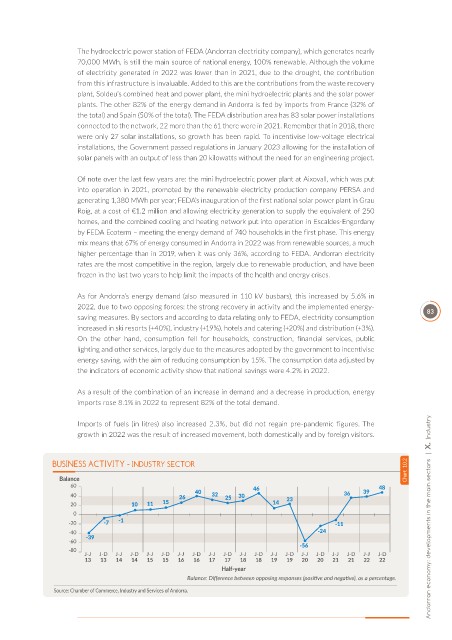
                                                                                                            Chart  10.2   Andorran economy: developments in the main sectors  |  X.  Industry
               BUSINESS ACTIVITY - INDUSTRY SECTOR


                                                  Balance: Difference between opposing responses (positive and negative), as a percentage.
               Source: Chamber of Commerce, Industry and Services of Andorra.

